@@u***243
Why does it feel like it’s been so long since Lily’s last solo Short? ㅠㅠ Please upload them more often, she’s so cute
What happened
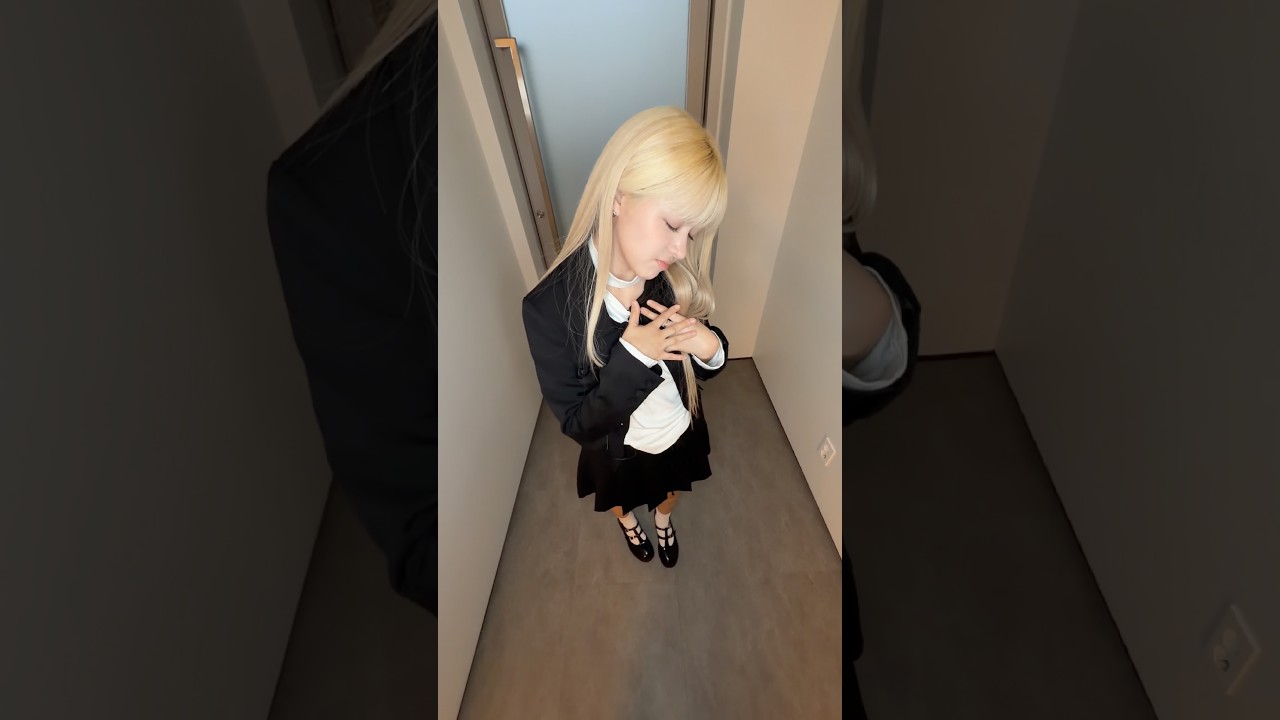
NMIXX’s Lily stars in a short built around repeated praise of how cute she is, while the captions shift from “cute when you smile” to “so cool my heart pounds.”
Why Koreans care
The caption’s 가슴이 콩콩 (gaseumi kongkong, “my heart goes thump-thump”) uses the sound-symbolic 콩콩 (kongkong) to make a pounding heart sound light and playful rather than dramatic.
In the Korean comments
One comment pinpoints two moments to watch: in translation, “When she flips her hair and does the ‘cool’ part, it has that click-into-place feeling. Is that just me?” The commenter’s 딸깍 (ttalkkak, “click”) describes the movements as sharply snapping into position.
What the words mean
Commenters call Lily 맏내 (matnae, “eldest-youngest”), a playful blend of 맏이 (madi, eldest) and 막내 (maknae, youngest). Here it affectionately describes an eldest member who comes across as endearingly cute like the youngest, rather than literally identifying her as the youngest.
Comments shown here come from this video.
The same comments the article read — most-liked first
Why does it feel like it’s been so long since Lily’s last solo Short? ㅠㅠ Please upload them more often, she’s so cute
The title speaks for my feelings
When she flips her hair and when she’s acting cool, there’s this click-click feeling—am I the only one? ㅋㅋㅋㅋㅋㅋ
BAKBING reaction summary
Fans are totally smitten by Lily's cuteness.
Short notes from fans
NMIXX fan notes

Strange Muse 6th EP Album

Strange Muse

Heavy Serenade

Blue Valentine

Fe3O4: FORWARD

Fe3O4: STICK OUT

Fe3O4: BREAK

A Midsummer NMIXX’s Dream
More videos related to this topic
 [SEVENTEEN’s SNAPSHOOT] EP.90 Best Friend Name Game“기빨린” (gippallin, literally “having one’s energy sucked out”) is casual, exaggerated…
 Lee Hyun and Ha, Epic Stuff 😎 #Shorts문짝남 (munjjaknam, literally “door-panel man”) is exaggerated slang for a very tall, broad…
 RESCENE 'With' MV Reaction가즈아 (gajeua, “let’s go”) is a deliberately exaggerated spelling of 가자 (gaja, “let’s go”).